


30-ročné americké dlhopisy nad 5,3%. Je to varovanie pre akcie?
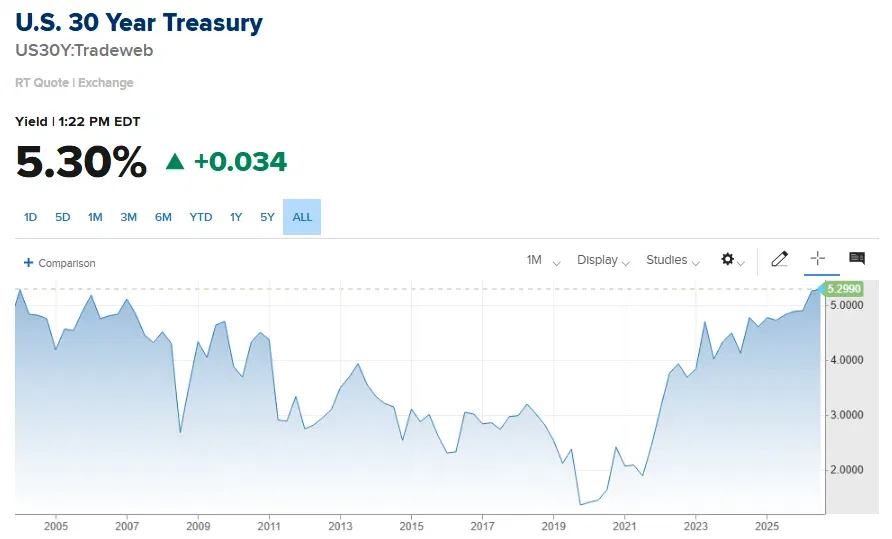
Výnos 30-ročných amerických štátnych dlhopisov dnes vystúpil až približne na 5,3%, čo je najvyššia úroveň od roku 2007.
Na prvý pohľad to môže vyzerať zle. Samotná podobnosť výnosov však ešte vôbec neznamená, že nás čaká finančná kríza. Oveľa dôležitejšie je pochopiť, prečo výnosy rastú a čo to znamená pre akcie.
Prečo dlhopisy padajú?
Aktuálny rast výnosov nie je primárne o tom, že by trh očakával agresívnejšie zvyšovanie sadzieb Fedu. 2-ročný Treasury sa pohybuje okolo 4,18 %, zatiaľ čo 30-ročný prekročil 5,3 %. Rozdiel je teda viac ako jeden percentuálny bod. Trh si pýta vyššiu kompenzáciu za riziká vzdialené desiatky rokov.
Hlavnými dôvodmi sú momentálne:
-vyššie inflačné riziko, podporené ropou nad $90,
-obavy z amerických deficitov a ďalšieho rastu štátneho dlhu,
-veľká ponuka nových dlhopisov,
-geopolitická neistota okolo konfliktu USA a Iránu.
Inými slovami, investori nechcú držať dlhodobý americký dlh za 4 %. Chcú za to viac ako 5 %.
A pre akcie vzniká jeden veľký problém. S&P 500 sa podľa FactSet obchoduje približne za 20-násobok očakávaných ziskov, teda jeho forward earnings yield je približne 5 %. 30-ročný americký dlhopis pritom ponúka okolo 5,3 %.
To neznamená, že dlhopis je automaticky lepší než S&P 500. Zisky spoločností môžu rásť, dividendy sa zvyšovať a akcie majú dlhodobo podstatne vyšší upside. Treasury navyše nie je bez rizika v reálnom vyjadrení – stále existuje inflačné a pri predaji pred splatnosťou aj výrazné úrokové riziko.
Ale investor dnes dostáva veľmi slušnú alternatívu k akciám bez toho, aby podstupoval firemné riziko.
A pri technologických a rastových firmách je tento rozdiel ešte výraznejší. Nasdaq 100 má forward P/E okolo 25,9, čo zodpovedá earnings yieldu len približne 3,9 %. Preto sú na rast dlhopisových výnosov najcitlivejšie práve drahé growth a AI akcie.
Ich valuácia stojí vo veľkej miere na ziskoch, ktoré majú prísť ďaleko v budúcnosti. Čím vyššiu diskontnú sadzbu investor použije, tým nižšiu hodnotu majú tieto budúce cash flow dnes.
Ale to neznamená hneď krach. To, že 30-ročný výnos nebol taký vysoký od roku 2007, je zaujímavé historické porovnanie, nie predikčný indikátor finančnej krízy. Na výraznejší bear market by som potreboval vidieť kombináciu ďalších problémov – napríklad prudké zhoršenie ziskov firiem, recesiu, rast kreditných spreadov alebo problémy vo finančnom systéme.
Toto skôr znemená to, že priestor na chybu pri draho ocenených akciách sa výrazne zmenšuje.
Ale svoje kvalitné firmy kvôli tomu určite nepredávam.
Pri nových nákupoch som však oveľa prísnejší na valuáciu a pri spoločnostiach, kde je v cene započítaný perfektný rast na ďalších 5–10 rokov, počítam s vyššou volatilitou. Ak vyššie výnosy spôsobia výraznejšiu kontrakciu valuácií, zatiaľ čo fundamenty konkrétnych firiem zostanú nezmenené, pre dlhodobého investora to môže byť podľa mňa pekná príležitosť.
